About 81.5 million people are expected to travel at least 50 miles from home between Tuesday, Nov. 24, and Monday, Nov. 30, according to AAA. That is about 0.1% fewer than last year. AAA expects 72.9 million to drive and about 5.96 million to fly within the U.S.
Weather could slow many of them down. On Wednesday, heavy rain is possible across much of the Southeast, and rain may turn to wet snow in parts of eastern Missouri, western Illinois and southeast Iowa, according to The Weather Channel. In Florida, the National Weather Service in Melbourne has a flood watch for Brevard, Indian River, St. Lucie, Martin and Okeechobee counties from 1 a.m. Wednesday to 1 a.m. Thursday. Most areas could see a half inch to an inch of rain, with 1 to 2 inches on the Treasure Coast and southern Brevard.
On Thanksgiving Day, a storm moving up the East Coast is forecast to bring heavy rain and strong winds to the mid-Atlantic and Northeast, with freezing rain possible in interior northern New England. The NWS office covering Philadelphia, New Jersey and Delaware expects gusts of about 40 to 50 mph inland and 50 to 60 mph at the coast. It has a high wind watch for the Delaware beaches and Jersey Shore and a coastal flood watch for Thursday, with moderate to possibly major tidal flooding.
In California, the NWS has a coastal flood warning for low-lying bayshore areas of San Francisco, San Pablo and Monterey bays on Wednesday morning and afternoon, and a high surf warning for Pacific beaches with breaking waves of 20 to 30 feet.
Status: Confirmed (AAA figures; NWS watches and warnings). Forecast timing and strength may change. Sources: AAA, Fox Weather, The Weather Channel, National Weather Service offices in Mount Holly (Philadelphia), Melbourne and San Francisco/Monterey. Updated Nov. 24, 2026, 6 a.m. CT.
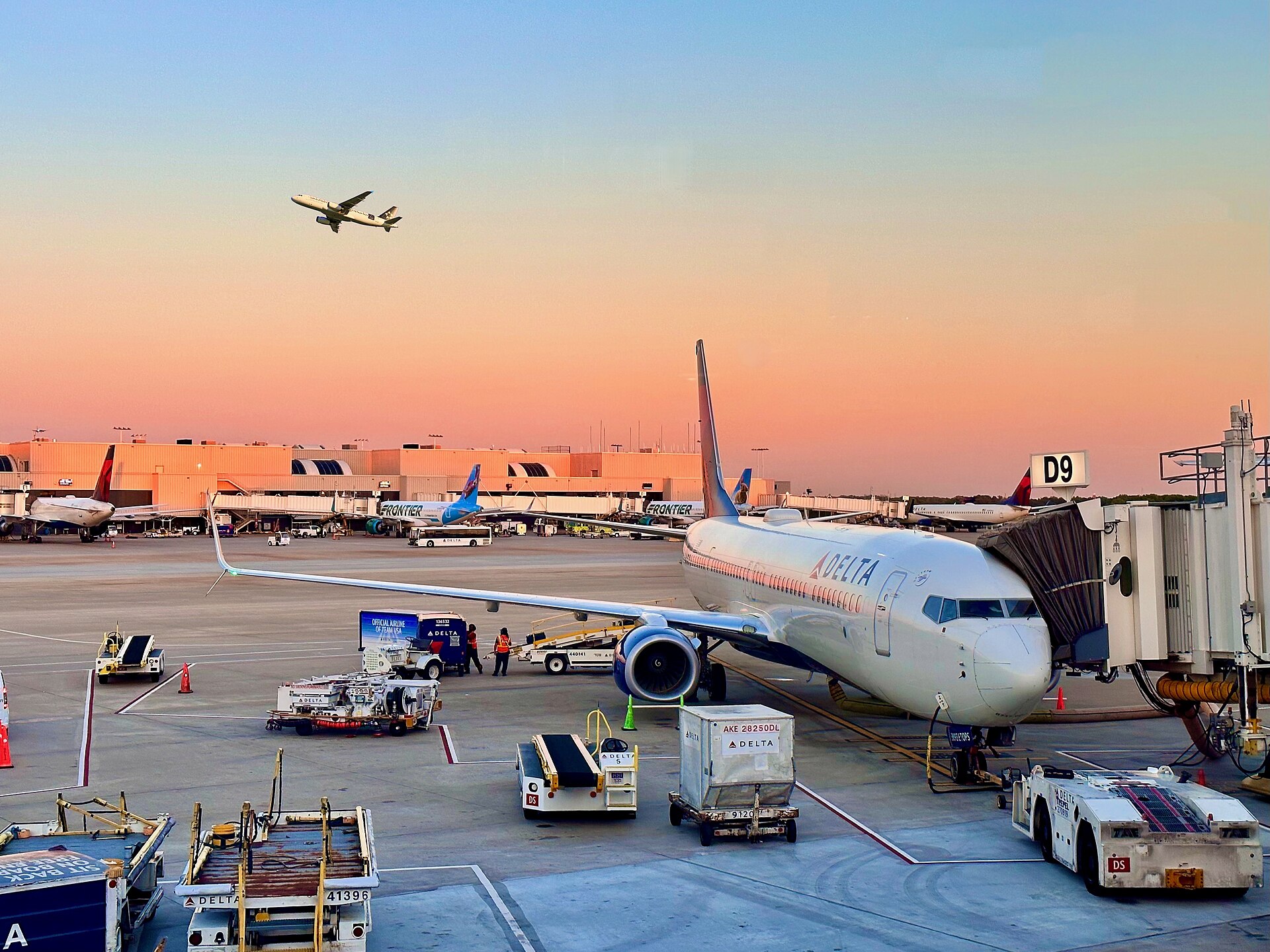
Photo: Hartsfield-Jackson Atlanta International Airport (file photo, May 2023). Harrison Keely via Wikimedia Commons (CC BY 4.0).
Why it happened
Forecasters expect an area of low pressure to form off the Southeast coast in the middle of the week and then travel north along the Atlantic coast, pulling in moisture and wind. At the same time, a separate series of Pacific storms is hitting the West Coast.
How it works
Bad weather at one big airport can cause delays far away. When wind or low clouds hit, air traffic controllers space landing planes farther apart, so fewer flights arrive each hour. Those late planes and crews are then late for their next flights in other cities.